
The Business Impact of Choosing the Right Luxury Packaging Box
Choosing the right luxury packaging box is a business decision, not just a design choice. For B2B buyers, packaging must balance aesthetics, product protection, cost control, and scalability. A poorly constructed box can drive up unit costs, complicate fulfillment, and weaken perceived product value, while the right solution reinforces brand positioning, enhances customer experience, and supports efficient operations from launch through growth. At Interpak, we work closely with buyers who need packaging that performs reliably both visually and operationally, often under tight timelines and evolving demand.
Start with Practical Requirements
Before moving forward with a box project, successful buyers align with the Interpak team and their internal team on a few core fundamentals:
- Product Dimensions and Structure—including inserts, closures, and tolerances
- How the Box Will Be Used—retail display, e-commerce shipping, gifting, long-term storage, etc.
- Target Unit Cost—based on scale and materials
- Order Quantities—launch volumes vs. long-term production needs
Clarifying these early prevents redesigns, cost surprises, and production delays later in the process.

Understanding Box Styles: Hinged Boxes vs. Rigid Set-Up
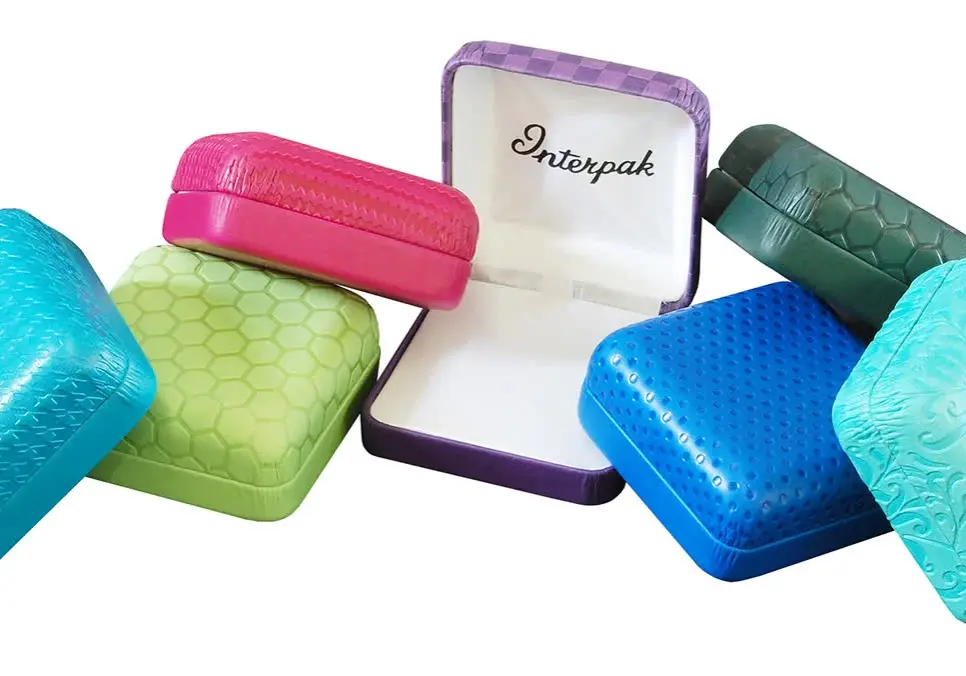
While both options fall under the “luxury packaging” category, hinged boxes and rigid set-up boxes serve different functional, aesthetic, and cost objectives. Understanding the difference helps buyers choose a structure that supports both brand perception and operational needs.
Hinged Rigid Boxes for Premium Product Packaging
Hinged boxes feature an attached lid, often utilizing a metal hinge, which creates a single, unified structure.
Best Suited For:
- Fine jewelry, coins, medals, awards, and commemorative items
- Products intended to be kept, stored, or reused long after purchase
- Brands emphasizing heritage, permanence, or heirloom value
Key Considerations:
- Strong durability and product protection
- Elevated perceived value and “keepsake” appeal
- Slightly higher unit cost due to construction complexity
Ideal for lower to mid-volume programs where experience outweighs scale
Hinged boxes excel when the packaging itself is meant to become part of the product story.
Rigid Set-Up Boxes
Rigid setup boxes refer to a construction method based on thick paperboard materials, not a single visual style. While they share a common structural foundation, rigid boxes can be executed in a wide range of formats to achieve different presentation effects and user experiences.
The most familiar rigid style is the two-piece box, consisting of a separate lid and base. However, rigid construction also allows for more specialized designs, such as
- Three-piece reveal boxes, featuring a lid, base, and a fitted middle paperboard that introduces a contrasting “reveal” color or design between the lid and tray
- Magnetic closure rigid boxes, which use a hinged flap with concealed magnets for a clean, premium open-and-close experience
- Two-piece rigid boxes with transparent plastic lids, often used for items like chocolate truffles or gift assortments, where product visibility enhances appeal
These examples represent just a few of the many ways rigid set-up construction can be adapted. Variations in proportions, opening mechanisms, inserts, and materials allow rigid boxes to be tailored to a wide range of products and brand objectives.
Best Suited For:
- Gift sets, luxury jewelry, luxury gift-worthy retail items, accessories, and premium consumer goods
- Programs requiring multiple sizes, inserts, or design variations
- Brands prioritizing scalability and visual customization
Key Considerations:
- Flexibility in size, wrap materials, textures, and finishes
- More cost-efficient at higher volumes
- Excellent balance of luxury appearance and operational efficiency
Both rigid set-up boxes and hinged boxes are often the go-to choice for brands seeking refined presentation with long-term production scalability.
Start Your Packaging Project
Have a project in development or exploring packaging options? Our team can help evaluate structure, materials, timelines, and production requirements to support informed decisions.
How Structural Materials Define Weight, Feel, and Perceived Value
Material selection is one of the most influential factors in how a luxury box feels in-hand. Beyond appearance, material choices determine perceived value, durability, sustainability, and unit cost.
Hinged Boxes: Structure and Material Working Together
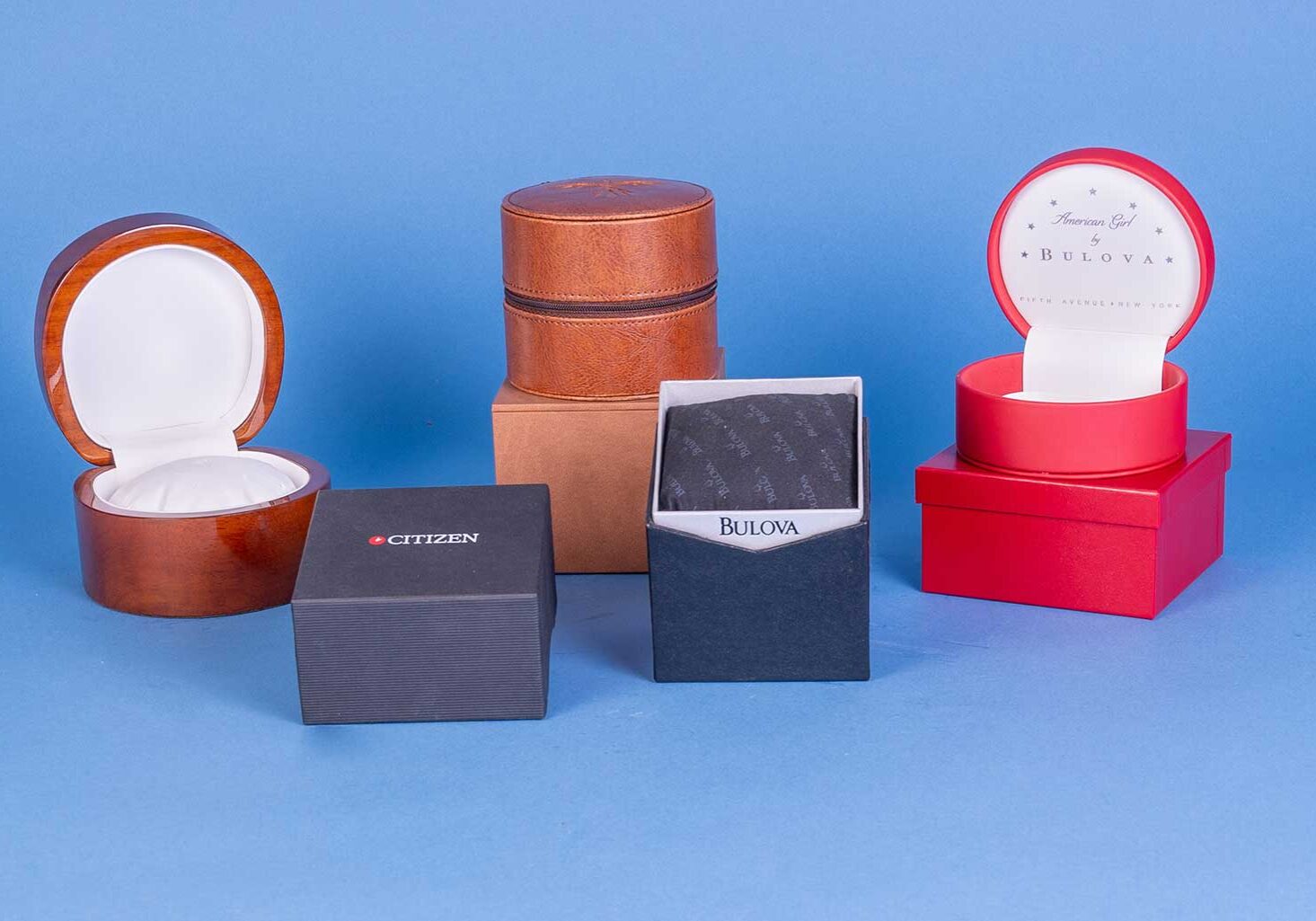
Hinged boxes introduce additional material considerations based on construction type. In these formats, the internal structure largely determines durability, weight, and longevity, while the exterior material influences the tactile feel and perception of luxury.
Wooden Hinged Boxes
- Solid wood construction provides natural weight and warmth
- Conveys heritage, craftsmanship, and heirloom quality
- Ideal for high-end jewelry, commemorative coins, medals, and awards
- Strong association with permanence and long-term display
- Higher unit cost and limited scalability compared to other hinged formats
Wrapped Metal Hinged Boxes
- Metal core provides weight, rigidity, and long-term durability
- Wrapped in paper or textile for refined presentation
- Ideal for coins, medals, awards, and collectible items
- Strong association with permanence and archival storage
Paperboard or Plastic Hinged Boxes
- Lightweight internal structure wrapped in paper or fabric
- Can be wrapped in paper or textile to achieve a refined, luxury appearance
- Offers a softer, more presentation-focused feel while maintaining form
- Well-suited for jewelry and gift-oriented packaging
- Greater flexibility in color, texture, finishes, and branding
Rigid Paperboard Boxes: Thickness = Quality Level and Luxury Signal
Rigid set-up boxes are constructed from paperboard (also known as chipboard), which can be specified at varying thickness levels, each conveying a different level of luxury and substance.
Common paperboard thickness for rigid boxes ranges, and what they communicate:
Standard Thickness .033” to .040” Thickness
- Clean, structured, and refined
- Ideal for premium retail, gift sets, and branded packaging programs
- Balances luxury appearance with cost efficiency
Mid-weight Paperboard .044” to .050” Thickness
- Noticeable weight and stiffness when handled
- Signals higher-end positioning without excess bulk
- Common choice for jewelry, cosmetics, and upscale gifting
Heavyweight Paperboard .055” to .070” Thickness
- Substantial, dense feel associated with heirloom-quality packaging
- Enhances the unboxing experience through physical weight
- Best suited for luxury goods where presentation is a key value driver
The thicker the board, the more “intentional” the box feels, an important consideration when packaging is meant to elevate the product inside.
Outer Wrap Materials: Defining the Tactile Experience
Outer wrap materials play a critical role in how a box feels in-hand and how luxury is perceived. These material options apply to both hinged boxes and rigid set-up boxes, with differences only in how they are executed during construction.
Start Your Packaging Project
Have a project in development or exploring packaging options? Our team can help evaluate structure, materials, timelines, and production requirements to support informed decisions.
Once board thickness and structure are selected, the exterior finish defines the sensory experience. It’s also worth noting that more premium finishes, such as soft-touch papers, generally carry a higher unit cost than standard or unwrapped options, which buyers often consider early in the decision-making process.
Popular wrap options include:
Soft-Touch Papers
- Smooth, velvety finish with a modern luxury feel
- Reduces glare and enhances color depth
- Frequently paired with minimalist branding
Sueded or Leather-Like Flocked Materials
- Plush, fabric-like texture associated with fine jewelry
- Adds warmth and softness to the unboxing moment
- Often used for interior inserts or full box coverage
Specialty Papers and Textured Wraps
- Linen, glossy, or matte finishes
- Allow brands to match specific aesthetic or heritage cues
What Drives Unit Cost in Custom Packaging?
Several key variables influence custom box pricing:
- Material selection paperboard thickness, wrap materials, specialty finishes
- Box Construction hinged mechanisms, multi-piece assemblies, complex inserts
- Quantity economies of scale significantly reduce per-unit cost
- Decoration and Branding foil stamping, embossing, specialty coatings
- Logistics Strategy warehousing, make-and-hold, and release schedules
Understanding these drivers enables buyers to make informed trade-offs without compromising their brand intent.
Standard Production Volumes
Interpak is primarily set up for mid-to-large production runs, where efficiencies in material purchasing, tooling, and labor can be fully realized.
For most custom rigid and hinged box programs, typical starting quantities range from 5,000 to 10,000 pieces, with pricing becoming increasingly favorable as volumes grow.
Small Lot Production: Flexibility by Design
Not all custom packaging programs are designed for high-volume production. Through our Small Lot Production Program, Interpak supports custom runs of anything under 1000 pieces for two common use cases:
- Early-stage brands launching or testing their first packaging program
- Luxury small-lot applications, such as limited editions, seasonal products, special releases, commemorative items, or marketing or influencer kits
At lower order quantities, buyers should expect a higher cost per unit due to labor, setup time, and material minimums that don’t scale down proportionally. These smaller runs are best viewed as a strategic investment, helping brands launch, test the market, or create exclusive, controlled-volume luxury offerings. As demand grows and volumes increase, unit costs typically decrease, creating a stronger foundation for long-term packaging efficiency and scalability.
Growing Together Over Time
Many of Interpak’s long-term customers began with small or limited-run programs and scaled as demand increased. As quantities grow, we’re able to:
- Reduce per-unit costs based on increase in volume
- Introduce additional materials or finishes based on the cost
- Offer inventory strategies

We believe in growing alongside our customers. Whether you’re launching a brand, releasing a limited edition, or planning for long-term scale, our goal is to support you at every stage with packaging solutions that evolve as your business does.
Trusted by Leading Brands
We collaborate with brands across jewelry, retail, and specialty markets to deliver consistent quality, scalable production, and dependable manufacturing partnerships. Every relationship is built on trust, performance, and long-term alignment.




Start Your Packaging Project
Have a project in development or exploring packaging options? Our team can help evaluate structure, materials, timelines, and production requirements to support informed decisions.
Typical Project Phases
- Concept and Design—collaborative development with our team: choosing the box type and embellishments, and aligning on cost
- Engineering—physical samples/prototypes for review and approval
- Budgeting and lead time expectations
- Production—scheduled based on quantity, construction, and finishes
- Delivery or Warehousing—timed to support product launches or replenishment cycles
Standard Lead-Time Guidelines
For U.S.-made packaging, typical lead times are approximately 6 weeks, depending on the level of customization and construction complexity and availability of materials and specialty finishes
Domestic production offers greater schedule control, faster communication, and fewer supply-chain variables, which are especially valuable for launch-driven or time-sensitive programs.
For imported packaging, typical lead times are approximately 13 weeks, accounting for:
- Overseas production scheduling
- Transit time and customs clearance
- Broader exposure to shipping and logistics variables
Planning for Success
Early collaboration helps ensure timelines stay on track. Finalizing specifications, minimizing revision cycles, and aligning material choices early in the process all contribute to smoother production and more predictable delivery.
Interpak’s lean manufacturing approach and domestic capabilities enable buyers to strike the right balance between speed-to-market and cost while maintaining consistent quality and open communication throughout the process.
In closing
Choosing the right luxury box means aligning materials, quantities, and timelines with both your product and your business goals. By understanding how box style, material selection, production volume, and lead time work together, buyers can make informed decisions that strengthen brand positioning, improve operational efficiency, and support long-term growth.
With Interpak’s concept-to-completion approach, custom packaging is attainable whether you need a short-run launch, a fast path to market, or a scalable long-term packaging program.
What Our Customer's Say
Take a look below at what some of our customers say about their experiences working alongside us.